
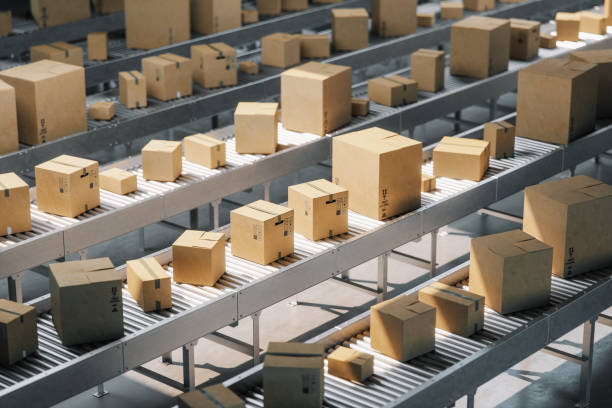
Cardboard boxes on conveyor belt in a distribution warehouse.
The future of e-commerce logistics is a topic of great interest and importance as the online retail industry continues to grow at a rapid pace. With advancements in technology and changing consumer expectations, the logistics landscape is expected to undergo significant transformations. In this article, we will explore some predictions and trends that are likely to shape the future of e-commerce logistics.
Automation in E-commerce Logistics: Enhancing Efficiency and Speed
The world of e-commerce has experienced tremendous growth in recent years, and this trend is expected to continue in the future. As more and more consumers turn to online shopping, the need for efficient and speedy logistics solutions becomes increasingly important. In response to this demand, the e-commerce industry is embracing automation as a means to enhance efficiency and speed in logistics operations.
Automation in e-commerce logistics involves the use of technology and machines to streamline various processes, from order fulfillment to delivery. One of the key areas where automation is making a significant impact is in warehouse operations. Traditionally, warehouse workers would manually pick and pack items for shipment. However, with the advent of automation, robots and machines are now taking over these tasks, resulting in faster and more accurate order fulfillment.
Automated guided vehicles (AGVs) are one example of how automation is revolutionizing warehouse operations. These vehicles are equipped with sensors and navigation systems that allow them to move around the warehouse autonomously, picking up and delivering items as needed. By eliminating the need for human intervention, AGVs can operate 24/7, significantly increasing the speed and efficiency of order fulfillment.
Another area where automation is enhancing efficiency in e-commerce logistics is in the sorting and packaging of items. Automated sorting systems can quickly and accurately categorize items based on their size, weight, and destination, reducing the time and effort required by human workers. Similarly, automated packaging machines can package items at a much faster rate than manual labor, ensuring that orders are prepared for shipment in a timely manner.
In addition to improving efficiency, automation in e-commerce logistics also helps to reduce errors and improve accuracy. Human workers are prone to making mistakes, especially when dealing with large volumes of orders. However, machines and robots are programmed to perform tasks with precision, minimizing the risk of errors. This not only improves customer satisfaction but also reduces costs associated with returns and replacements.
Furthermore, automation in e-commerce logistics enables real-time tracking and monitoring of shipments. With the use of advanced tracking technologies, such as GPS and RFID, both businesses and customers can easily track the progress of their orders from the moment they are shipped until they reach their destination. This level of transparency not only enhances customer experience but also allows businesses to identify and address any issues that may arise during the delivery process.
While automation in e-commerce logistics offers numerous benefits, it is important to note that it is not without its challenges. Implementing automation technologies requires significant investment in terms of both capital and training. Additionally, there may be concerns regarding the displacement of human workers as machines take over certain tasks. However, with proper planning and strategic implementation, these challenges can be overcome, and the benefits of automation can be fully realized.
In conclusion, automation is set to play a crucial role in the future of e-commerce logistics. By embracing automation technologies, businesses can enhance efficiency and speed in their logistics operations, resulting in improved customer satisfaction and increased profitability. While there may be challenges along the way, the potential benefits far outweigh the risks. As the e-commerce industry continues to evolve, it is clear that automation will be a key driver of success in the years to come.
Artificial Intelligence and Machine Learning: Transforming E-commerce Logistics
The future of e-commerce logistics is rapidly evolving, with advancements in technology playing a crucial role in shaping the industry. One area that is set to have a significant impact is artificial intelligence (AI) and machine learning (ML). These technologies have the potential to transform e-commerce logistics by improving efficiency, reducing costs, and enhancing the overall customer experience.
AI and ML can be used to automate various aspects of the logistics process, from inventory management to route optimization. By analyzing large amounts of data, these technologies can identify patterns and make predictions, allowing businesses to make more informed decisions. For example, AI-powered algorithms can analyze historical sales data to forecast demand, enabling companies to optimize their inventory levels and avoid stockouts or overstocking.
Furthermore, AI and ML can help streamline the order fulfillment process. By using algorithms to analyze customer data, businesses can personalize the shopping experience and offer targeted recommendations. This not only improves customer satisfaction but also increases the likelihood of repeat purchases. Additionally, AI-powered chatbots can provide real-time customer support, answering queries and resolving issues, thereby enhancing the overall customer experience.
Another area where AI and ML can make a significant impact is in route optimization. By analyzing factors such as traffic patterns, weather conditions, and delivery time windows, these technologies can determine the most efficient routes for deliveries. This not only reduces fuel consumption and transportation costs but also ensures timely deliveries, improving customer satisfaction. Moreover, AI-powered drones and autonomous vehicles can further enhance the efficiency of last-mile delivery, reducing the need for human intervention.
In addition to improving efficiency, AI and ML can also help in fraud detection and prevention. By analyzing transactional data and identifying suspicious patterns, these technologies can flag potentially fraudulent activities, allowing businesses to take appropriate action. This not only protects businesses from financial losses but also helps maintain customer trust and confidence in the e-commerce platform.
However, it is important to note that the widespread adoption of AI and ML in e-commerce logistics also raises concerns about job displacement. As these technologies automate various tasks, there is a possibility of job losses in certain areas of the logistics industry. Therefore, it is crucial for businesses to invest in reskilling and upskilling their workforce to ensure a smooth transition to the future of e-commerce logistics.
In conclusion, AI and ML have the potential to revolutionize e-commerce logistics. These technologies can automate various aspects of the logistics process, improve efficiency, reduce costs, and enhance the overall customer experience. From inventory management to route optimization, AI and ML can analyze large amounts of data to make informed decisions and predictions. However, it is important for businesses to address the potential job displacement and invest in reskilling and upskilling their workforce. As the e-commerce industry continues to evolve, embracing AI and ML will be crucial for businesses to stay competitive and meet the ever-changing demands of customers.
Last-Mile Delivery Innovations: Revolutionizing E-commerce Logistics
The last-mile delivery is a critical aspect of e-commerce logistics. It refers to the final leg of the delivery process, where goods are transported from a distribution center to the customer’s doorstep. Over the years, last-mile delivery has undergone significant changes, driven by technological advancements and changing consumer expectations. In this article, we will explore the latest innovations in last-mile delivery and how they are revolutionizing e-commerce logistics.
One of the most significant trends in last-mile delivery is the use of drones and autonomous vehicles. These technologies have the potential to transform the delivery process by reducing costs and increasing efficiency. Drones, in particular, have gained popularity due to their ability to navigate through traffic and deliver packages quickly. Companies like Amazon and UPS have already started testing drone delivery services, and it is expected that this trend will continue to grow in the coming years.
Another innovation in last-mile delivery is the use of crowdshipping. Crowdshipping is a concept where individuals or businesses can sign up to deliver packages on behalf of e-commerce companies. This approach leverages the existing infrastructure of individuals’ vehicles and allows for faster and more flexible deliveries. Crowdshipping platforms like Roadie and Deliv have gained traction in recent years, and they are expected to play a significant role in the future of e-commerce logistics.
In addition to drones and crowdshipping, the use of lockers and smart delivery boxes is also gaining popularity. These lockers and boxes are strategically placed in public areas, allowing customers to pick up their packages at their convenience. This eliminates the need for customers to be present at home during delivery and reduces the risk of package theft. Companies like Amazon and Walmart have already implemented locker systems, and it is expected that more retailers will follow suit.
Furthermore, the rise of on-demand delivery services has also impacted last-mile delivery. On-demand delivery services like UberEats and Postmates have revolutionized the food delivery industry, and they are now expanding into other sectors. These services offer fast and convenient delivery options, allowing customers to receive their packages within hours. As on-demand delivery services continue to grow, they are likely to have a significant impact on the future of e-commerce logistics.
Lastly, the use of artificial intelligence (AI) and machine learning is transforming last-mile delivery operations. AI-powered algorithms can optimize delivery routes, predict demand patterns, and improve overall efficiency. By analyzing data from various sources, AI can help companies make informed decisions and streamline their delivery processes. Companies like FedEx and DHL have already started using AI in their operations, and it is expected that more companies will adopt this technology in the future.
In conclusion, last-mile delivery innovations are revolutionizing e-commerce logistics. From drones and autonomous vehicles to crowdshipping and smart lockers, these technologies are reshaping the way packages are delivered to customers. Additionally, on-demand delivery services and AI-powered algorithms are improving efficiency and customer satisfaction. As e-commerce continues to grow, it is crucial for companies to stay ahead of these trends and embrace the latest innovations in last-mile delivery. By doing so, they can ensure a seamless and efficient delivery experience for their customers.
Sustainable Practices in E-commerce Logistics: Environmental Considerations
The rise of e-commerce has revolutionized the way we shop, with more and more consumers opting to make purchases online. As a result, the logistics industry has had to adapt to meet the growing demand for efficient and timely delivery of goods. However, with this increase in online shopping comes a greater environmental impact, as the transportation and packaging of goods contribute to carbon emissions and waste. In response to these concerns, sustainable practices in e-commerce logistics have emerged as a key focus for the industry.
One of the main environmental considerations in e-commerce logistics is the reduction of carbon emissions. As the transportation of goods is a significant contributor to greenhouse gas emissions, companies are exploring ways to minimize their carbon footprint. One approach is the use of electric vehicles for last-mile delivery, which can significantly reduce emissions compared to traditional diesel-powered vehicles. Additionally, optimizing delivery routes and consolidating shipments can help reduce the number of vehicles on the road, further decreasing carbon emissions.
Another aspect of sustainable e-commerce logistics is the reduction of packaging waste. With the increase in online shopping, there has been a corresponding increase in the amount of packaging material used. To address this issue, companies are exploring alternative packaging materials that are more environmentally friendly, such as biodegradable or recyclable materials. Additionally, some companies are implementing innovative packaging designs that minimize the use of materials while still ensuring the safe delivery of goods.
In addition to reducing carbon emissions and packaging waste, sustainable e-commerce logistics also involves the responsible management of returns. Returns are a common occurrence in e-commerce, and the handling and transportation of returned goods can have a significant environmental impact. To mitigate this, companies are implementing strategies to minimize returns, such as providing detailed product information and images to ensure customers make informed purchasing decisions. Additionally, companies are exploring ways to streamline the returns process, such as offering virtual try-on options for clothing or implementing automated return systems.
Furthermore, sustainable e-commerce logistics also involves the consideration of energy consumption in warehouses and fulfillment centers. These facilities require a significant amount of energy to operate, from lighting and heating to the operation of machinery and equipment. To reduce energy consumption, companies are implementing energy-efficient technologies, such as LED lighting and automated systems that optimize energy usage. Additionally, the use of renewable energy sources, such as solar panels, is becoming increasingly common in warehouses and fulfillment centers.
Overall, sustainable practices in e-commerce logistics are essential for minimizing the environmental impact of online shopping. By reducing carbon emissions, minimizing packaging waste, managing returns responsibly, and optimizing energy consumption, companies can contribute to a more sustainable future. However, it is important to note that the adoption of these practices requires collaboration between e-commerce companies, logistics providers, and consumers. Only through collective efforts can we ensure that the future of e-commerce logistics is environmentally responsible. As the industry continues to evolve, it is crucial that sustainability remains at the forefront of decision-making, driving innovation and shaping the future of e-commerce logistics.
Blockchain Technology: Securing and Streamlining E-commerce Logistics
The rise of e-commerce has revolutionized the way we shop, with more and more consumers opting to make purchases online. As a result, the logistics industry has had to adapt to meet the growing demands of this digital marketplace. One technology that is set to play a significant role in the future of e-commerce logistics is blockchain.
Blockchain technology, most commonly associated with cryptocurrencies like Bitcoin, is a decentralized and transparent ledger system that records transactions across multiple computers. Its potential applications extend far beyond the financial sector, and e-commerce logistics is one area where it is expected to make a significant impact.
One of the key benefits of blockchain technology in e-commerce logistics is its ability to enhance security. With traditional logistics systems, there is always a risk of fraud or tampering with the supply chain. However, blockchain provides a secure and immutable record of every transaction, making it virtually impossible for anyone to alter or manipulate the data. This increased level of security will give consumers greater confidence in the e-commerce process, knowing that their purchases are protected from potential threats.
In addition to security, blockchain technology also has the potential to streamline e-commerce logistics. Currently, the logistics process involves multiple intermediaries, such as shipping companies, customs agents, and warehouses, each with their own systems and databases. This can lead to inefficiencies and delays in the supply chain. However, by using blockchain, all parties involved in the logistics process can have access to a single, shared ledger, eliminating the need for multiple systems and reducing the risk of errors or miscommunication.
Furthermore, blockchain technology can also enable greater transparency in e-commerce logistics. With a shared ledger, all parties involved can track and trace the movement of goods throughout the supply chain in real-time. This transparency not only improves efficiency but also allows for greater accountability. If an issue arises, such as a lost or damaged package, it can be easily identified and resolved, reducing the burden on both consumers and logistics providers.
Another trend that is expected to shape the future of e-commerce logistics is the use of smart contracts. Smart contracts are self-executing contracts with the terms of the agreement directly written into code. They automatically execute actions when certain conditions are met. In the context of e-commerce logistics, smart contracts can be used to automate various processes, such as payment verification, customs clearance, and delivery confirmation. This automation not only reduces the need for manual intervention but also speeds up the overall logistics process, resulting in faster and more efficient deliveries.
While blockchain technology holds great promise for the future of e-commerce logistics, there are still challenges that need to be addressed. One of the main challenges is scalability. As the volume of e-commerce transactions continues to grow, the blockchain network needs to be able to handle the increased load. Additionally, there are also concerns about the energy consumption associated with blockchain technology, as the process of mining new blocks requires significant computational power.
In conclusion, blockchain technology has the potential to revolutionize e-commerce logistics by enhancing security, streamlining processes, and increasing transparency. With its ability to provide a secure and immutable record of transactions, blockchain can instill greater confidence in consumers and reduce the risk of fraud. By eliminating the need for multiple systems and enabling real-time tracking, blockchain can also streamline the logistics process, resulting in faster and more efficient deliveries. However, there are still challenges that need to be overcome, such as scalability and energy consumption. Nonetheless, the future of e-commerce logistics looks promising with the integration of blockchain technology.
Augmented Reality and Virtual Reality: Enhancing the Customer Experience in E-commerce Logistics
The world of e-commerce logistics is constantly evolving, with new technologies and trends shaping the way businesses operate. One area that holds great promise for the future is augmented reality (AR) and virtual reality (VR). These technologies have the potential to revolutionize the customer experience in e-commerce logistics, providing a more immersive and interactive shopping experience.
AR and VR have already made their mark in various industries, from gaming to healthcare. In e-commerce logistics, they offer exciting possibilities for enhancing the customer experience. Imagine being able to try on clothes virtually before making a purchase, or visualizing how a piece of furniture would look in your living room. These technologies can bridge the gap between the physical and digital worlds, allowing customers to make more informed decisions.
One of the key benefits of AR and VR in e-commerce logistics is the ability to provide a more personalized shopping experience. By using these technologies, businesses can create virtual showrooms where customers can browse and interact with products in a way that feels more like a physical store. This not only helps customers make better purchasing decisions but also increases their engagement and satisfaction with the brand.
Another advantage of AR and VR in e-commerce logistics is the potential to reduce returns. One of the biggest challenges for online retailers is dealing with returns, which can be costly and time-consuming. By allowing customers to virtually try on clothes or visualize products in their own space, businesses can minimize the risk of customers buying items that don’t meet their expectations. This not only saves money but also improves customer satisfaction and loyalty.
Furthermore, AR and VR can also streamline the logistics process itself. For example, warehouse workers can use AR glasses or headsets to receive real-time information about inventory location and order fulfillment. This can significantly improve efficiency and accuracy, reducing the chances of errors and delays. Additionally, delivery drivers can use AR navigation systems to optimize their routes and ensure timely deliveries.
While AR and VR offer great potential, there are still some challenges that need to be addressed. One of the main barriers is the cost of implementing these technologies. AR and VR devices can be expensive, and businesses need to invest in the necessary infrastructure and software to support them. However, as technology advances and becomes more accessible, these costs are likely to decrease, making AR and VR more feasible for e-commerce logistics.
Another challenge is the need for seamless integration with existing systems and platforms. Businesses need to ensure that their e-commerce platforms can support AR and VR features, and that they can easily integrate with their logistics and inventory management systems. This requires collaboration between different departments and stakeholders, as well as careful planning and testing.
In conclusion, AR and VR have the potential to revolutionize the customer experience in e-commerce logistics. These technologies can provide a more personalized and immersive shopping experience, reducing returns and improving customer satisfaction. While there are challenges to overcome, the future looks promising for AR and VR in e-commerce logistics. As technology continues to advance, businesses that embrace these technologies will have a competitive edge in the evolving world of e-commerce.
In conclusion, the future of e-commerce logistics is expected to witness significant advancements and transformations. Key predictions and trends include the rise of automation and robotics, the adoption of artificial intelligence and machine learning for efficient operations, the integration of blockchain technology for enhanced transparency and security, the expansion of same-day and on-demand delivery services, the utilization of drones and autonomous vehicles for last-mile delivery, and the increasing focus on sustainability and eco-friendly practices. These developments are set to revolutionize the e-commerce logistics industry, enabling faster, more efficient, and environmentally conscious delivery of goods to consumers worldwide.