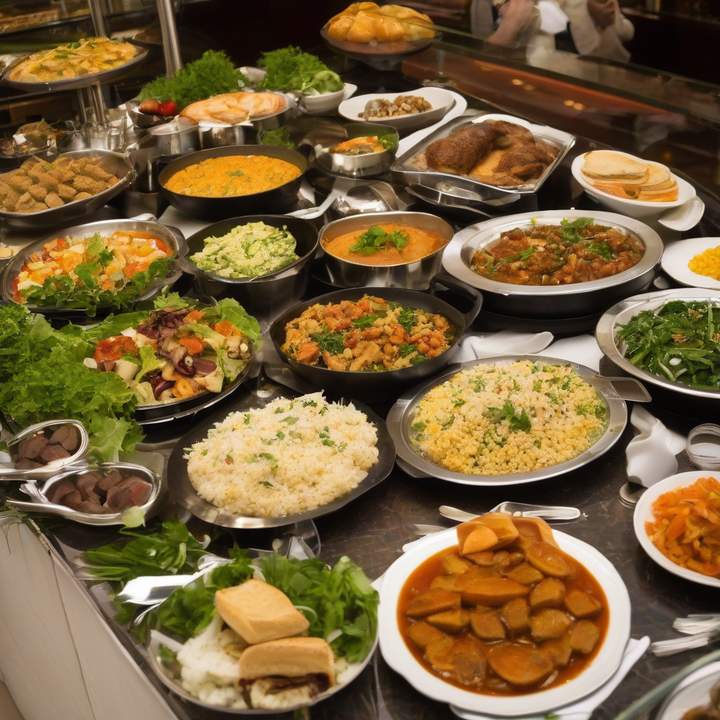
People serving themselves at a crowded buffet table.
When it comes to dining out, buffets can be a convenient and affordable option. However, they also pose significant health risks due to contamination and temperature control issues. In the UK, approximately 2.4 million cases of food-borne illness are reported each year, with many more going unreported. As we delve into the world of buffets, it’s essential to understand the hidden dangers that lurk beneath the surface.
The Hidden Dangers of Buffets
Buffets are particularly vulnerable to cross-contamination due to the large number of dishes on display and the fact that customers serve themselves. Shared utensils and close food proximity can spread bacteria, putting individuals with weakened immune systems at risk. Moreover, allergens can be a major concern at buffets, particularly for individuals with food allergies. The Food Standards Agency (FSA) estimates that there are closer to 18 million cases of food poisoning in the UK each year, highlighting the need for increased awareness and vigilance.
Cross-Contamination at Buffets
Cross-contamination is a significant risk at buffets, where shared utensils and close food proximity can spread bacteria. For instance, if a customer uses a serving spoon to handle raw meat and then uses the same spoon to serve themselves a salad, they can transfer bacteria like Salmonella or E. coli to the salad. This can have severe consequences, especially for individuals with weakened immune systems, such as the elderly or young children. To reduce the risk of cross-contamination, it’s essential to use separate utensils for each dish and wash hands regularly.
Allergens and Buffets
Allergens can be a major concern at buffets, particularly for individuals with food allergies. Clear allergen labeling and staff training on allergen safety are essential in reducing the risk of allergic reactions. For example, if a buffet offers a dish containing nuts, it’s crucial to label it clearly and provide alternative options for customers with nut allergies. Moreover, staff should be trained to handle allergens safely and provide guidance to customers on how to navigate the buffet safely.
Temperature Control and Food Safety
Temperature control is crucial in preventing the growth of harmful bacteria. Hot food needs to be kept above 63C, while cold food should be kept below 8C. Neglecting temperature control can have severe consequences, including food poisoning. To ensure proper temperature control, it’s essential to regularly monitor food temperatures and use thermometers. Moreover, buffets should have a system in place for maintaining temperature control, such as using heated or chilled serving dishes.
Staying Safe at Buffets
To stay safe at buffets, it’s essential to be mindful of food handling and preparation. Read labels carefully, ask staff about ingredients, and avoid dishes that have been left at room temperature for an extended period. Additionally, prioritize hygiene practices, such as washing hands regularly and using separate utensils for each dish. By taking these precautions, individuals can reduce their risk of food-borne illness and enjoy a safe and healthy dining experience.
In conclusion, buffets pose significant health risks due to contamination and temperature control issues. However, by understanding these risks and taking precautions, individuals can protect themselves and their loved ones from food-borne illnesses. As we prioritize food safety, it’s essential to remember that a safe and healthy dining experience is just a few simple steps away.